Nervios en el equipo de ‘Desmadre Incluido’ ante su estreno en el Festival de Cine de Tarazona

Fernando Orte

TARAZONA.- Llegará a las salas de cine en septiembre, pero el público de Tarazona ha podido disfrutar del estreno de ‘Desmadre incluido’, la comedia de Miguel Martí que el propio director presentaba en el Festival de Cine de Comedia ‘Paco Martínez Soria’ con parte del equipo artístico. En concreto, las actrices Macarena Gómez, Arlette Torres, Pilar Ordóñez y Antonio Meléndez.

“Aquí en Tarazona es donde venimos a estrenar, donde nos hemos puesto nuestras mejores galas, y venimos aquí a iniciar toda la promoción”, ha comentado Martí. Se trata de una “comedia aterradora y delirante” en la que una serie de personajes son obligados a pasar una noche encerrados en un hotel de Béjar, en Salamanca, donde la firma de Cervantes se mezcla con una boda y otra serie de situaciones que incluyen “pasiones, terror e instintos reprimidos”.

Es el cuarto largo de ficción que dirige Martín, “una comedia de enredo y terror, una película muy divertida, muy coral, hecha por gente que nos gusta mucho el cine”. “Nos fuimos a un hotel, en el mismo donde teníamos los decorados vivíamos, comíamos y rodábamos. Es una película hecha con amor, amor por el cine”, ha sentenciado.

La protagonista del largo ha hecho una firme defensa de la comedia: “Me alegra que haya festivales dedicados única y exclusivamente a la comedia, porque al final es lo que más dinero genera en el cine y sin embargo está un poco denostada a la hora de premiarla. Raro es que nominen o premien a un actor de comedia”, ha afirmado Macarena Gómez.

La actriz ha destacado que el festival “promociona, promover y poner en valor la comedia”. “Es mucho más complicado ser actor de comedia que actor de drama, para la comedia además creo que tienes que tener un don, es algo innato”, ha añadido.

PRIMEROS CORTOS EN EL BELLAS ARTES

En esta jornada dominical comenzaban las proyecciones del certamen nacional de cortometrajes, con los primeros trabajos a concurso. Es el caso de ‘Feminancy’, una producción de 6 minutos que presentaron su directora y también actriz Uxuri Etxegia Etxebeste y otra de las protagonistas, Alaitz Leatxe.

Un “falso documental de comedia, muy divertido, muy loco y muy punky”, según explicaban las artistas navarras, que pudieron interactuar con el público turiasonense en el tradicional coloquio posterior, al que se sumaron Raúl García Medrano y Camino Ivars de ‘El peor oficio del mundo’, el cortometraje de Luis Larrodera que se proyectó fuera de concurso.

“No podía faltar al festival primero porque es comedia, y segundo porque hace un guiño a la propia Tarazona. Aparte está muy relacionado con el propio festival porque casi todo el mundo que sale en el corto son amigos del festival”, destacaba el productor.

INTENSA JORNADA

La tercera jornada del festival comenzará a las 11.00 con una matinal infantil, y a las 13.00 se celebrará el primero de los encuentros organizados con motivo del veinte aniversario del festival. Jorge Asín, Javier Lafuente y Fernando Gracia se citan en el Hotel Encanto de Tarazona.

Por la tarde (19.00) seguirán las proyecciones de cortos, con más trabajos a concurso: ‘El umbral’, ‘Una comedia muy moderna’, ‘Camino a Damasco’, ‘Els Mal’, ‘Clavos’, ‘La Concha’ y ‘Regreso al armario’. Y a las 22.30, nuevo título del certamen de largometrajes, ‘La fortaleza’.
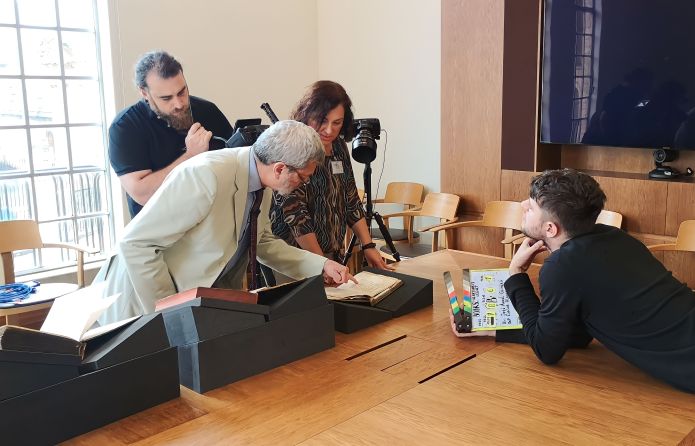
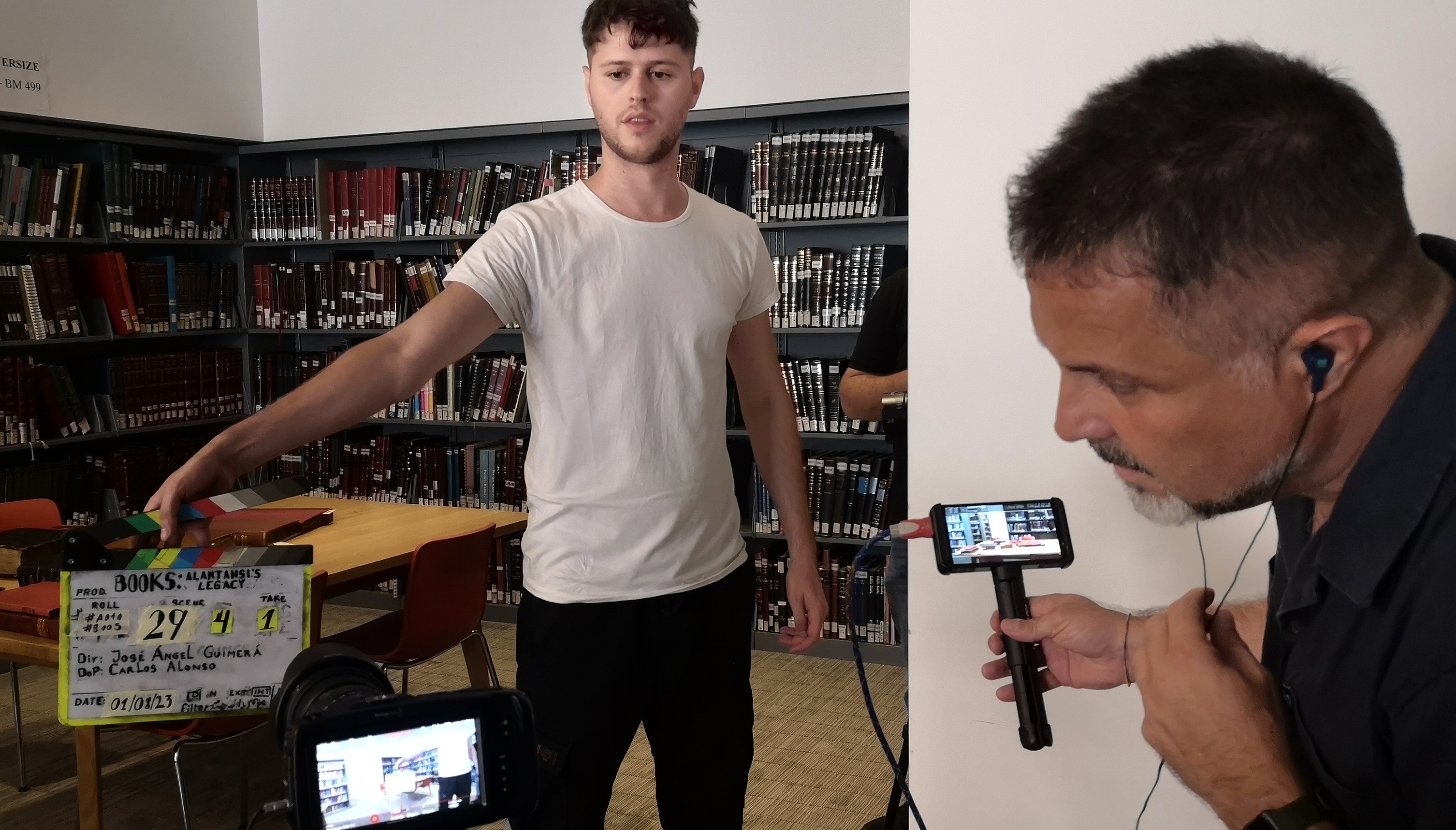
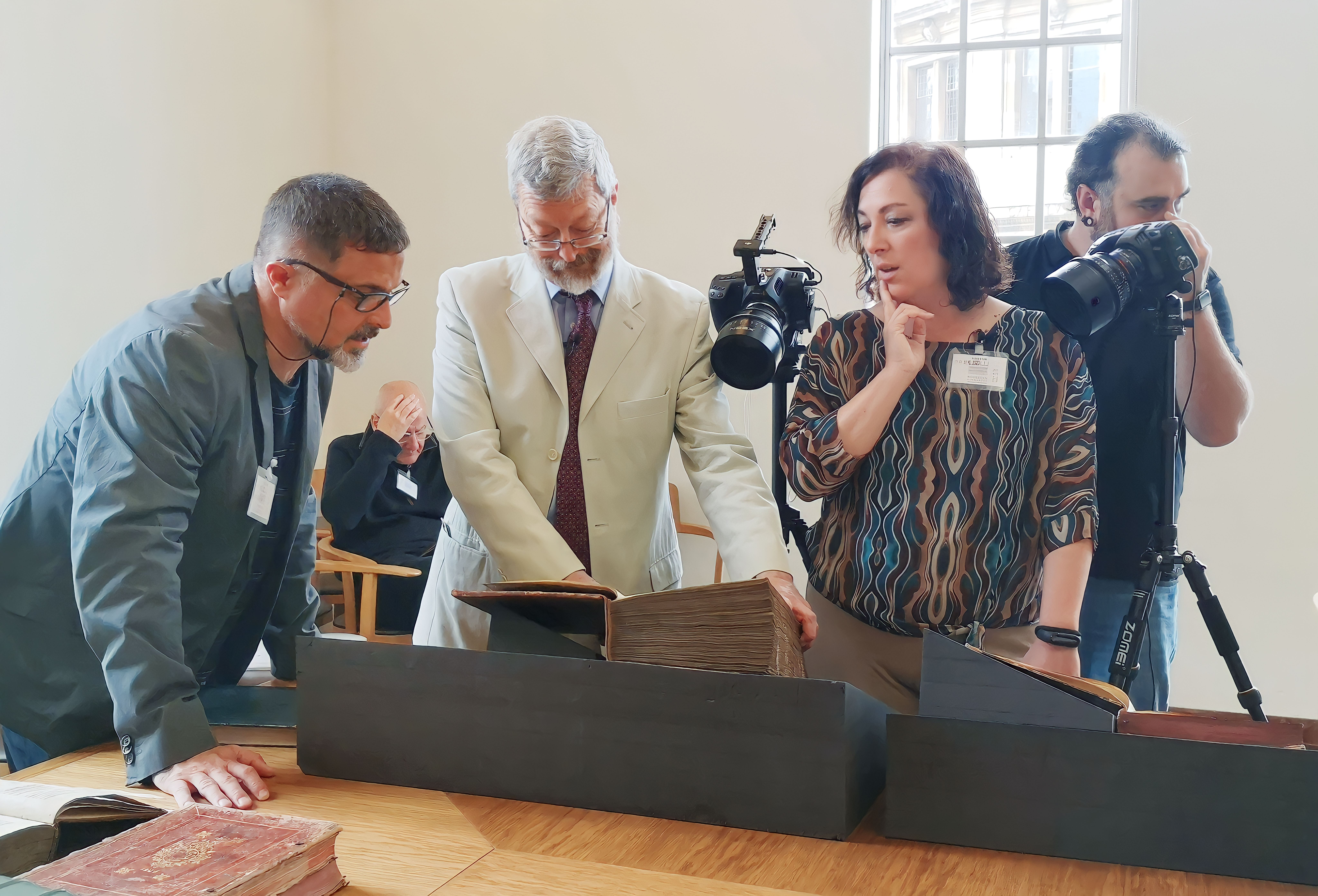
​Books, Alantansi´s Legacy is a documentary feature film by the Spanish filmmaker José Ángel Guimerá

A Hebrew printing press located in Híjar (Aragon, Spain) on 15th century is the origin of some of the main incunabula or early printed books in the Iberian Peninsula, which are studied in prestigious universities and research libraries around the world. The tracking of the clues left in their pages, along with the peculiar life of the printer will be brought to life in a documentary feature film format.

In October 2016, the Centro de Estudios del Bajo Martín -a non-profit organization- arranged an International Colloquium on Jewish Heritage in Híjar (Spain), aimed at revealing fascinating history of Early Hebrew printing in Spain and Híjar’s remarkable Jewish Heritage and synagogue. This scientific event was coordinated by Lucía Conte, historian specialized in Híjar’s printing press and former visiting researcher at the JTSA, who invited several specialists from Spain, Israel and the US to gather there and present the potential and the importance of Alantansí’s story and legacy.

Alantansí established a pioneering workshop in the small Aragonese town of Híjar, in the former kingdom of Aragon. His works were called to become the most important examples of Hebrew printing in Sepharad.

The term incunabula (from latin “in cuna”), refers to books “in the cradle”, this is, to the books made “in the cradle” of printing activities, i.e. during the childhood of this new art (from 1453 to 1500). Just a few of these are printed in Hebrew in Spain, as the presses in the Hispanic Kingdoms where short-lived due to the Expulsion and the Inquisition. However, at least fifty-eight complete or fragmentary extant copies remain today, scattered across three of the five continents in the main university libraries and private collections in places such as Madrid, New York, New Heaven, Philadelphia, Connecticut, Puerto Rico, Paris, Milan, Roma, Parma, Pesaro, Oxford, London, Jerusalem or Saint Petersburg, to name a few.

The known editions issued from Alantansi’s press are:

Tur Orah Hayim, by Jacob ben Asher (1485)

-Hebrew Bible with the Five Megillot and the Haftarot (1486-1487)

Neviim Aharonim (1486-1487)

Tur Yoreh De’ah, by Jacob ben Asher (1487)

– Torah with Targum Onkelos and Rashi’s comments (1490)

The books printed by Alantansí in Híjar reveal the quality of the materials used by skilled printers with a good taste. The editions, in square and Rabbinic characters, include capital letters engraved in wood and other ornaments of great beauty. Most books from Híjar’s press present the mark of the printer: a single rampant lion, sometimes enclosed in a shield. If the historical, artistic, and cultural significance of these incunabula is already beyond doubt.

Equally interesting is the life and personality of the printer. Eliezer ben Abraham Alantansí settled in Híjar (time called Ixar) where around 40 Jewish families lived at the time, protected by the first Duke of Híjar, Don Juan Fernández de Híjar y Cabrera.

Alantansí established his workshop in 1482, and it remained active until shortly before the Expulsion of the Jews from Spain, with a last known edition printed in 1490. He was, indeed, a very interesting person: a scholar with an innate vision for business who lived a fascinating life that deserves to be narrated. This is the proposal of this documentary: to show a key figure of Jewish culture in 15th century Spain, not yet recognized by the public.

Alantansí’s printing press was dismantled after the death of the first Duke of Híjar in 1490, who could have probably been a protector and sponsor of the enterprise.  The relationship between the Duke and Alantansí’s printing workshop, as well as the itinerary that Alantansí himself followed when he left Híjar remain an enigma, which researchers working in this documentary project are trying to unravel.

Alantansi’s life is full of curiosities, which are determining to understand Jewish life at that time. A docu-fiction model has been chosen to narrate his life, where we will see our protagonist surrounded by his contemporaries, both in his native Osca (now Huesca), and in the old Jewish quarter of the town of Ixar.

While he leaves aboard a ship to a forced exile, Eliezer remembers the anecdotes or stories he lived in those places. The ship sequences have been shoot in one of the caravels that are parked on the banks of the Río Tinto, on the outskirts of Palos de la Frontera, Cadiz (Spain).

A main setting is the re-discovered old synagogue of Híjar, which is a unique example of almost complete medieval synagogues in Spain, and the only one which preserves painted decoration. The original paintings have been recreated in a set constructed specially for the shooting to transport us to those inspiring years. The Four Sephardic Synagogues in Jerusalem will also play the same role.

As the documentary discovers the printer’s life, it will also reveal the importance of his work. We will follow Lucía Conte -the second protagonist of this story-, in her scholarly research journey through different libraries and international universities to follow the footprints left in Alantansí’s books preserved in different countries, to use them as clues who share a fascinating part of the history of the People of the Book. The path followed by Lucía includes the Spanish National Library, the National Library of Israel, the Bodleian Library in Oxford, among other libraries and historical archives.

One of the mains is where she started her research journey: the Library of the Jewish Theological Seminary of America at Columbia University in the city of New York. Dr. Marjorie Lehman and Dr. Markus Mordecai Schwartz have shared and discovered the footprints and stories behind the precious copies preserved at JTSA. In Oxford was Cesar Merhan-Hamann, the Hebrew and Judaica curator in the Bodleian Library, who showed us a selection of Alantansí’s incunabula.